.svg)
There is a unique, quiet electricity in the studio when opening the kiln after testing a new glaze recipe. For me, the excitement goes way beyond color—it’s about the tactile victory of the chemistry. How do the raw oxides melt, fuse, and mature against the clay body?
Recently, I was hunting for a very specific aesthetic: an ultra-matte, non-reflective surface that feels like an organic, weathered specimen rather than a vessel coated in glass. This test of "Rutile Matt" fired to Cone 6 in oxidation delivered exactly that—a sophisticated, stony finish that rewards both the eye and the hand.
Visual Breakdown: Micro-Crystalline Textures & Maturation
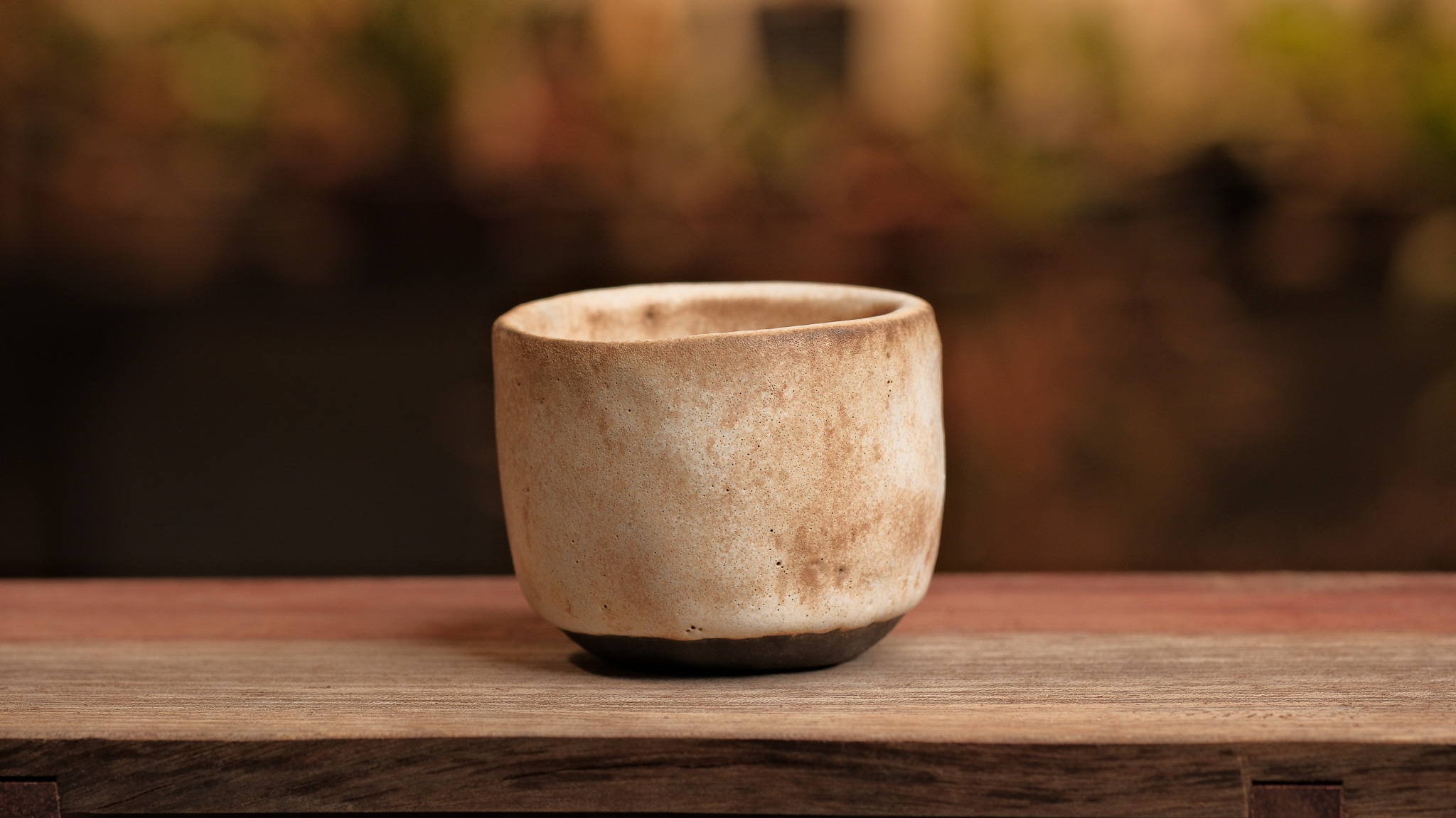
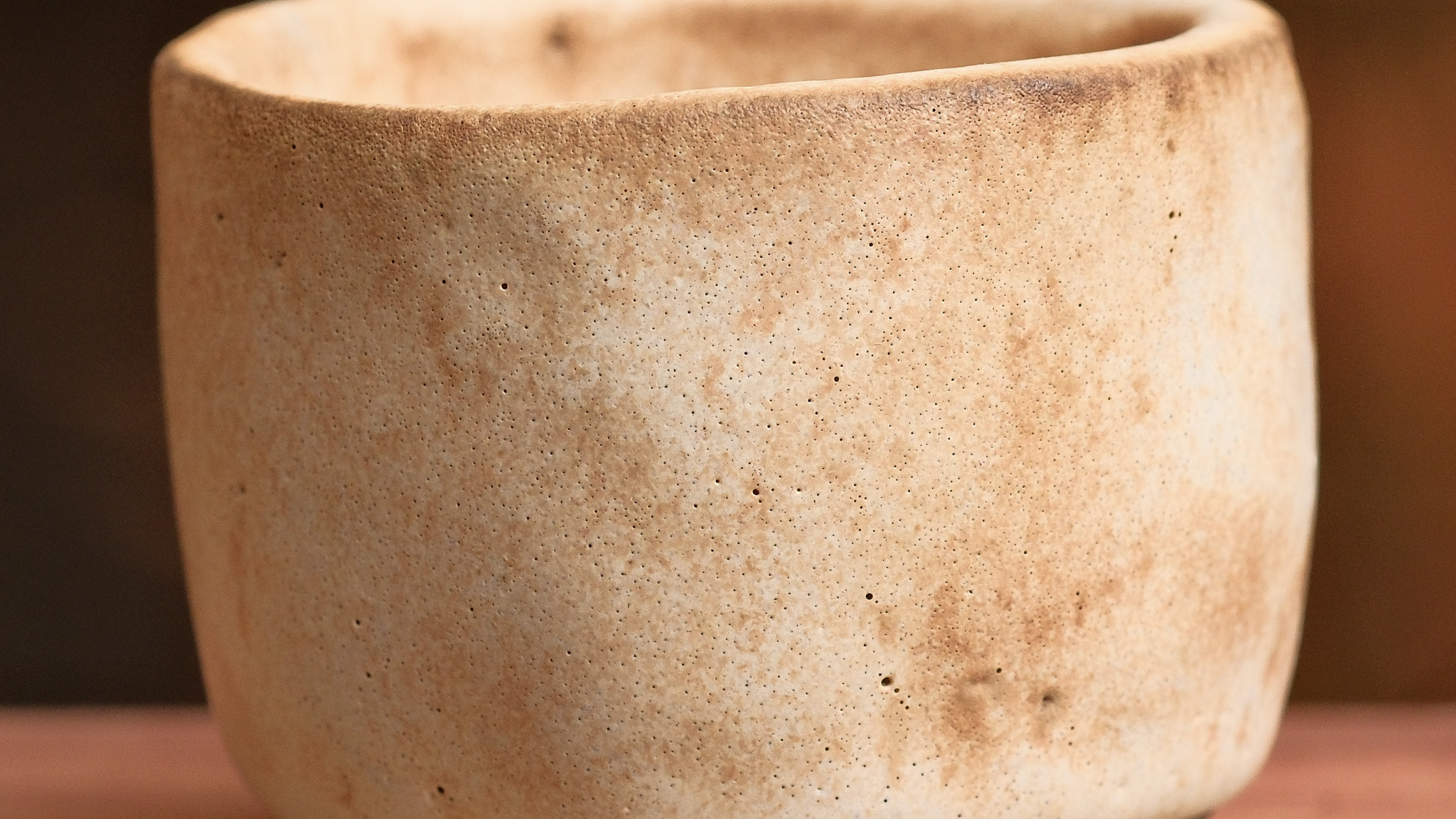
Opening the kiln revealed a glaze that achieved perfect surface maturation without a hint of that "greasy" gloss often found in mid-range mattes.
- Zero Reflection: This finish is a textbook "dead matte." It absorbs light entirely, giving the vessel a clean, contemporary silhouette.
- Oatmeal & Parchment Tones: The color palette shifted from a simple tan into a complex range of oatmeal and parchment, punctuated by iron-rich speckles and natural variegation from the rutile.
- Stony, Weathered Texture: The surface has a bone-like quality. Up close, both the interior and exterior reveal a fine, consistent micro-pitting. While some might consider this a defect, here it works as a deliberate micro-texture that enhances the organic feel.
- The "Break" and Pooling: Over rims and ridges, the glaze thins out and recedes, leaving a dark, toasted edge where it meets the clay. Where applied heavily, it pools into a lush, creamy white.
Dark Stoneware as a Catalyst
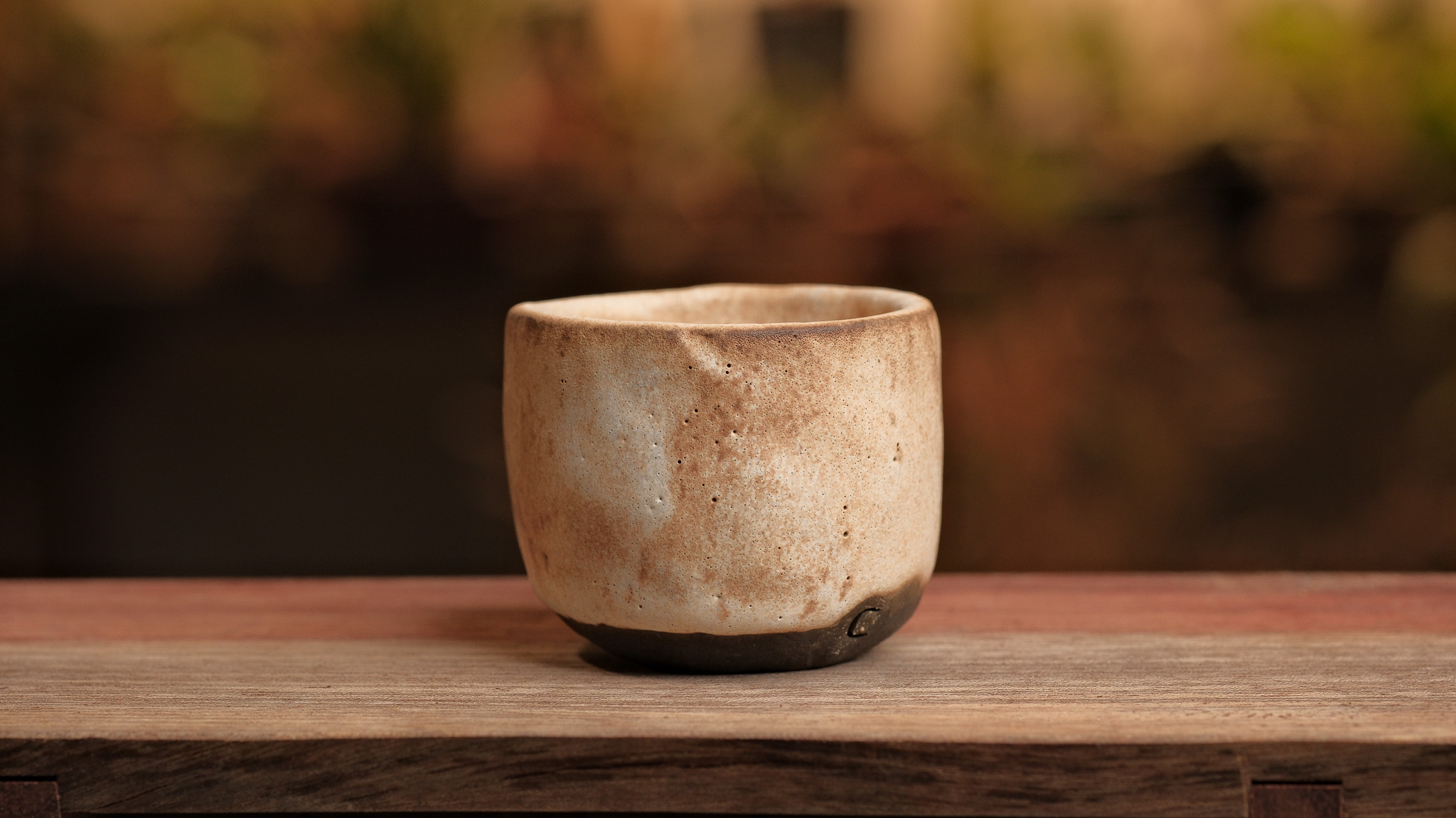
Choosing a dark brown stoneware body was essential to this result.
                                  ┌─── Creamy White (Heavy Dip / Pooling)
                                  │
  [ Vessel Surface ] ─────────────┼─── Parchment & Oatmeal (Standard Application)
                                  │
                                  └─── Dark Toasted Rim (Thin Break over Edges)
                                           │
[ Bare Stoneware Foot ] ───────────────────┴─── Heavy, Raw Clay Foundation
- High Contrast at the Base: The raw, exposed dark clay at the foot creates a heavy, grounded foundation for the lighter parchment tones above.
- Thermal & Visual Engine: The iron content in the dark clay body bleeds warmth into the glaze, preventing the matte finish from looking flat or chalky. That dark substrate pushes through thinner areas to create variegated rust tones—a depth that would be completely lost on a white porcelain body.
The Recipe: Behind the Chemistry
"Rutile Matt" falls squarely into the Zinc-Matte category, featuring high levels of both zinc and alumina. The high concentration of Zinc Oxide encourages micro-crystal formation during the cooling cycle, which scatters light and creates that distinct buttery, soft-touch hand-feel.
Base Recipe (Cone 6 Oxidation)
- Nepheline Syenite: 56%
- Whiting: 20%
- EPK (Edgar Plastic Kaolin): 18%
- Silica (Flint): 6%
Additions (Calculated over the 100% base)
- Zinc Oxide: + 9%
- Rutile: + 7%
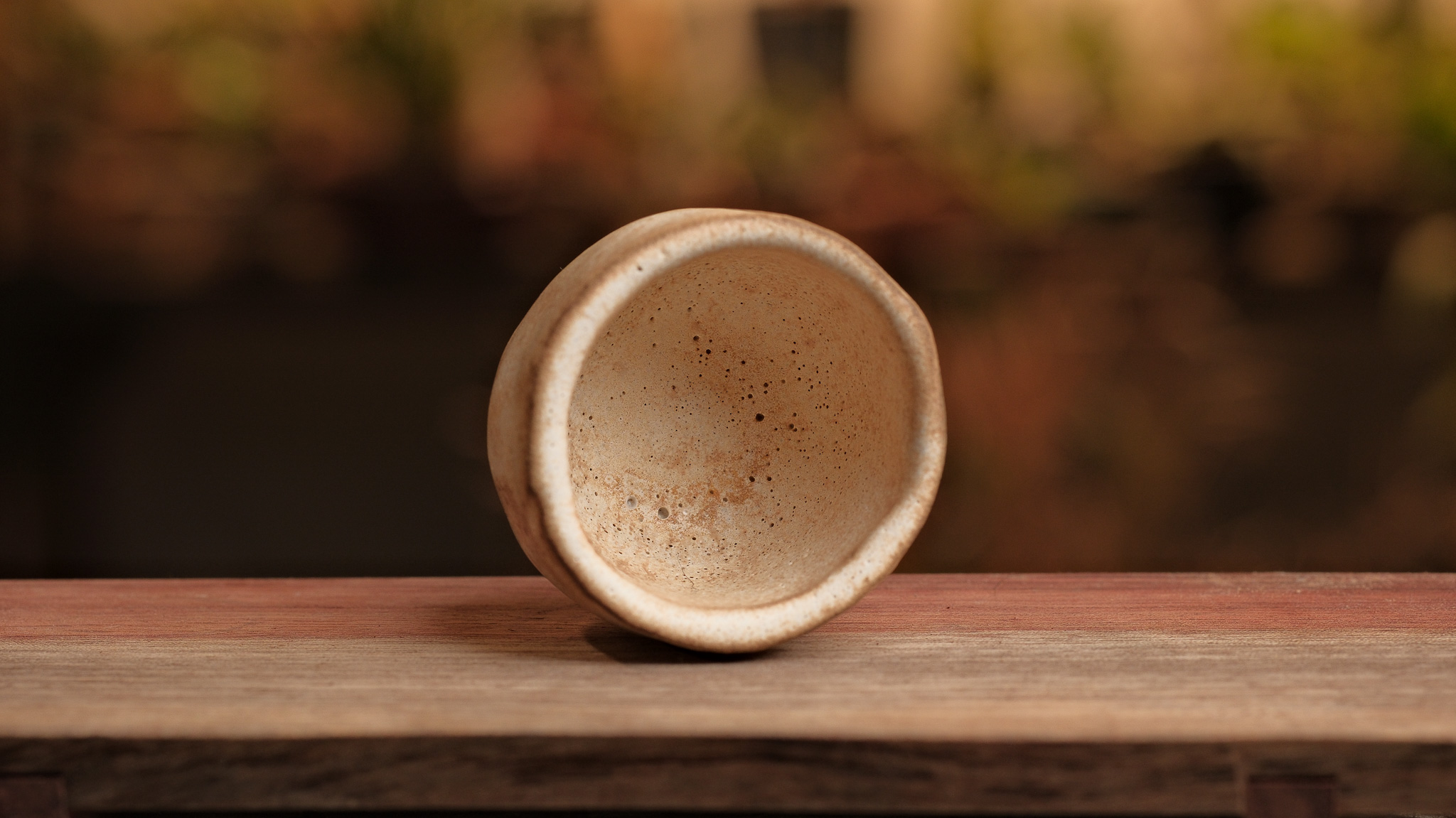
Nigel’s Studio Note: The 7% Rutile (an impure titanium ore) drives phase separation in the melt. The glaze briefly splits into two immiscible liquids that don't fully blend, resulting in that gorgeous iron-speckled, streaky parchment visual.
Firing Parameters & Studio Tips
I fired this piece to a solid Cone 6 in an oxidation atmosphere. If you are looking to move away from standard commercial gloss glazes, this recipe is remarkably forgiving and reliable for a first-time mix.
Application Advice
- Maintain Specific Gravity: Keep your dip controlled for consistent results.
- Single Quick Dip: Yields a consistent, speckled parchment tone with strong, toasted breaks over the edges.
- Heavier Application or Rim Dip: Triggers a phase change to creamy white pooling near the top or in interior crevices.
Playing with these application thicknesses lets you achieve a multi-layered, studio-quality look from a single bucket of glaze. Give it a shot in your next firing!